Data Source Wizard
- 2 minutes to read
The Data Source Wizard allows you to configure a data source and retrieve its data.
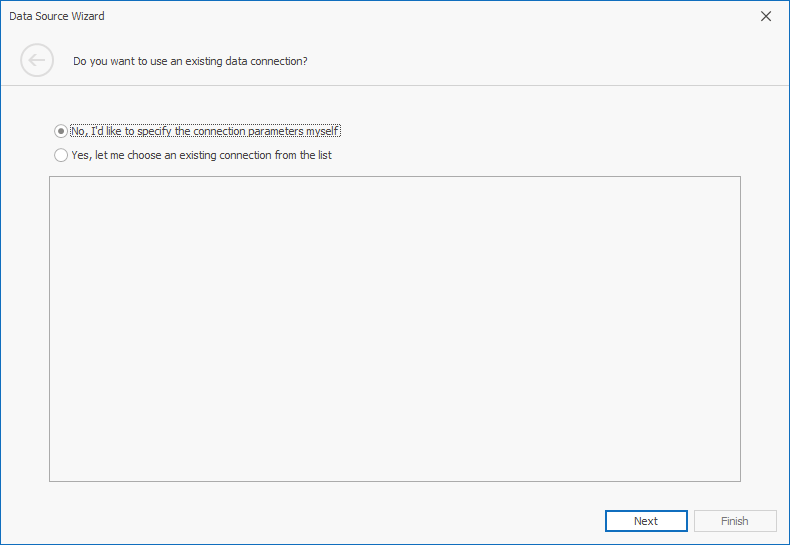
The first page allows you to create or select an existing data connection.
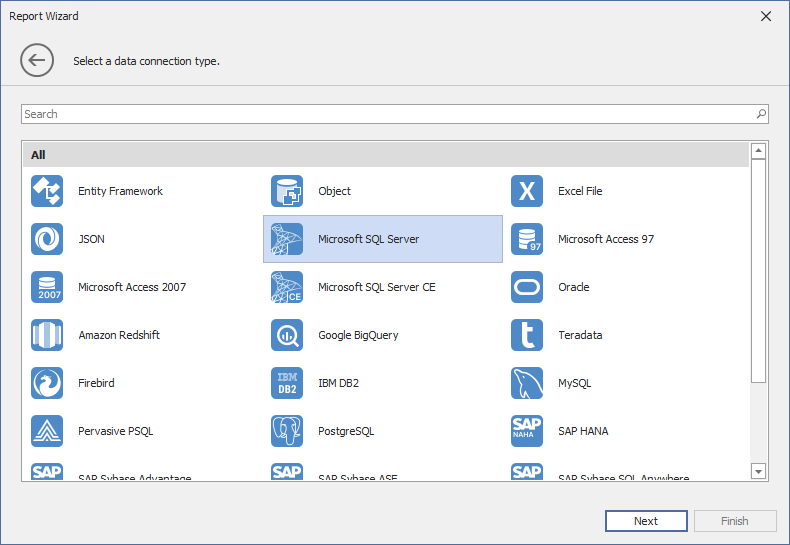
If you chose a new connection, the next page allows you to select the data connection type.
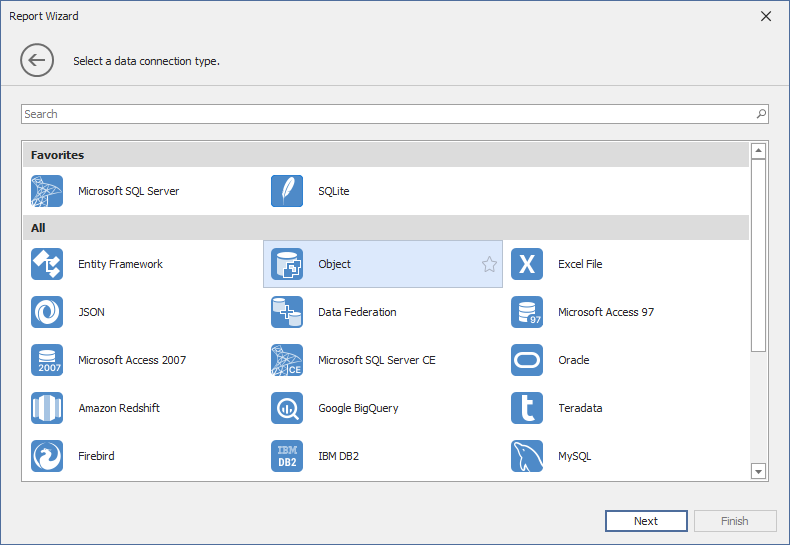
You can select a provider and click the “star” icon to pin frequently used database providers as favorites. Favorite providers appear at the top of the list for quick access:
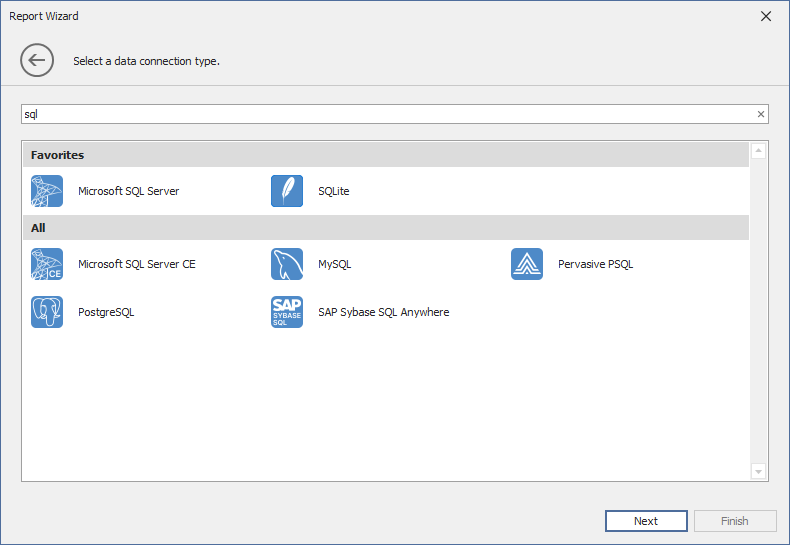
Use the search panel to filter the connection type list:
Use the Data Source Wizard
The Data Source Wizard allows you to do the following:
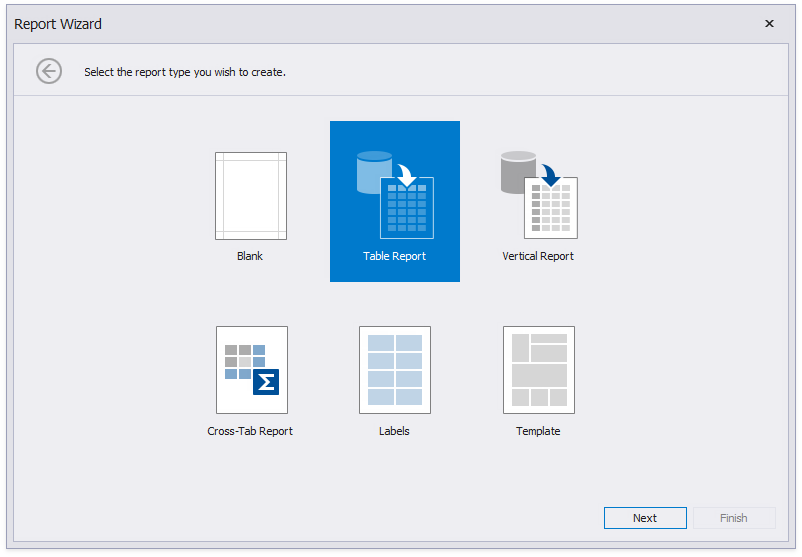
Add a new data-bound report to your application using the Report Wizard, which contains the Data Source Wizard pages.
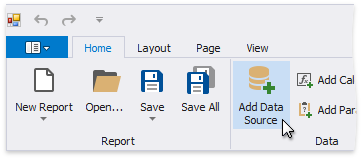
Bind an existing report or its Detail Report band to data. To invoke this Wizard, click Add Data Source on the Ribbon‘s Home page.
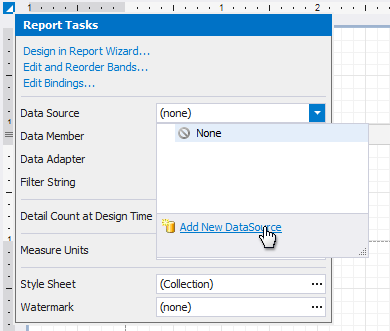
Alternatively, click the report’s smart tag, expand the DataSource property’s drop-down menu and click Add Report Data Source.
Connect the Chart, Cross Tab and Sparkline report controls to individual data sources.
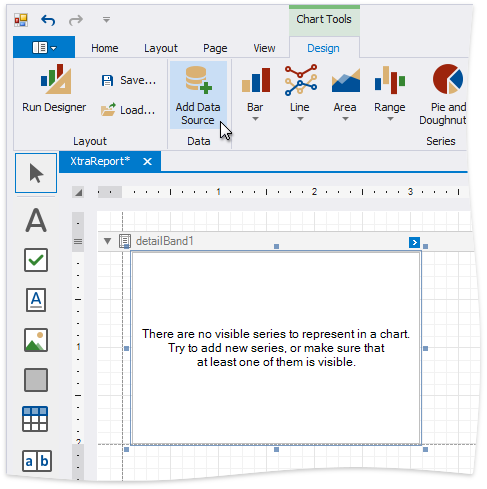
You can invoke the Data Source Wizard using the Add Data Source command on the Chart | Design contextual page.
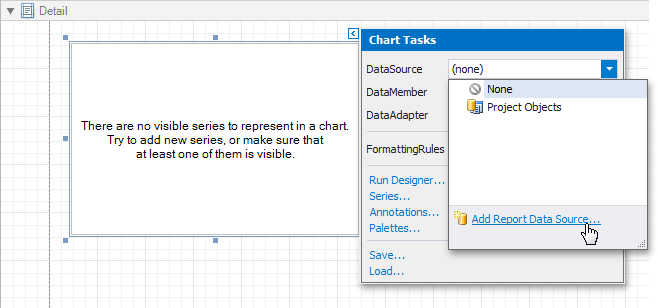
You can invoke the Data Source Wizard using the DataSource property in the chart’s smart tag.
Supported Data Source Types
The wizard supports the following data source types:
-
Obtains data from all major data providers (Microsoft SQL Server, XML data, Microsoft Access, Oracle, etc.).
-
Supports binding to a Microsoft ADO.NET Entity Framework data source.
-
Connects to a data object.
-
Obtains data from Microsoft Excel workbooks (XLS, XLSX or XLSM files) or CSV files.
-
Connects to JSON-formatted data.
-
Connects to a MongoDB instance.
-
Allows you to bind to XPO data.
-
Allows you design a report that is not bound to a data source.